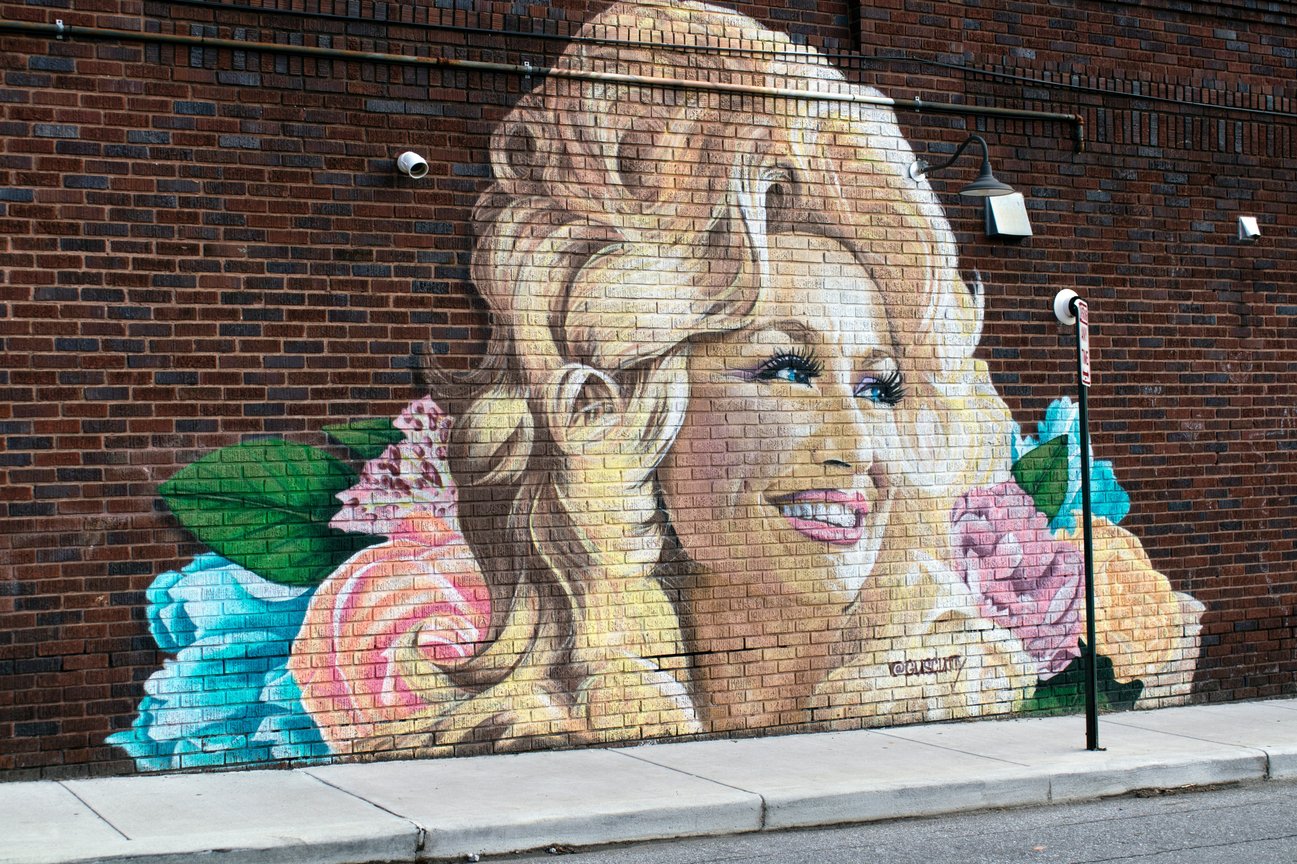
Ultimately genuine. Universally loved.
If you know me you know I love Bluegrass music. Any Bluegrass, but especially traditional, gritty storytelling, raw tunes from real and metaphoric mountains. In the early '90s I bought a bluegrass compilation of CDs and had Doc Watson, Bill Monroe, The Stanley Brothers, and Jim & Jesse on constant repeat. But Dolly Parton captured my Bluegrass heart with her song Jolene. My appreciation of all Dolly's musical talent grew, but it is the admiration for the woman that I share with the whole world. When the world loses someone like her it's good to reflect.
What made Dolly Parton such a force in the world? What will we miss most? How can the impact one woman made be replicated? How do we make it last?
I couldn't help myself, but to see her life and legacy through a branding lens.
She Was Impossible to Misread
Is there a stronger personal brand in American history with a clearer value proposition? The www.dollyparton.com memorial page nailed it: "global icon and humanitarian… beloved singer, songwriter, philanthropist, actress, playwright, and author… her legacy is one of love, kindness, and resilience." But I feel like that summary undersells how clear she was in practice. The Dolly brand was legible in a single image: big hair, rhinestones, Appalachian roots, unwavering warmth, and a wink that said she was in on the joke. You never had to guess what Dolly Parton was about. The image was the message. Every extension of her brand, from the theme park, the books, the philanthropy, the music, they all pointed back to the same story: a girl from the Great Smoky Mountains who dreamed big and never forgot where she came from.
She Was One of a Kind
She once entered a Dolly Parton lookalike contest. Did her make-up a little heavier. Emphasized her birthmark. She lost. Even Dolly was not Dolly enough to meet expectations of the iconic image. Her image occupied a visual and emotional space no one else could credibly inhabit. What elevated her look from aesthetic to strategy was her ownership of the joke. Her reaction to a barrage of comments about her appearance was to get in on the game: "It takes a lot of money to look this cheap" she often said. She gave us a masterclass in self-possession and never apologized for it; she amplified it.
She Owned Her Story
Brand consistency rarely survives a change of seasons, let alone a long career. Dolly's did, for two structural reasons. First, she owned her intellectual property from the beginning. She established her first business, Owepar Publishing Co., at 21 years old, with its principal holdings being her lyrics and music. Maybe modern musicians are finally learning this lesson, but at the time it was far more common for record labels to own an artist's IP. Maintaining that kind of ownership can be painful. Maybe the most famous moment came when Elvis Presley wanted to record "I Will Always Love You" but his manager demanded half the publishing rights. Dolly refused. She cried through the night, but surrendering half the copyright would have altered her ownership forever. The wisdom paid off. When Whitney Houston recorded the same song in 1992 Parton retained the publishing rights and joked the royalties earned her enough money to buy Graceland. Second, she was extremely disciplined when it came to brand extensions. "If I'm going to be big business," Parton said in 1982, "I want to be pretty much in control." The result: her extensions succeeded because each carried a recognizable piece of the original story. Her theme park, books, philanthropy, and commercial collaborations all kept returning to Tennessee, family, aspiration, and self-belief.
She Drew Everyone In
At a time when no American celebrity seems immune from the country's many divisions, Dolly Parton was a crossover icon who stayed neutral in the culture wars while still speaking her mind. Country music fans, pop music fans, Republicans, Democrats, presidents, faith leaders, and drag queens all genuinely mourned her passing. That breadth of appeal was not accidental. "I've got as many Republican fans as Democrats and I don't want to make any of them mad at me, so I don't play politics," she once said. But the appeal was also musical and cultural, not just political. Across her career, Dolly's music topped Billboard's Hot 100, Country, Pop, Adult Contemporary, Bluegrass, Christian, Rock, and Dance charts. It's hard to think of another artist that pulled off a range like that. Her philanthropic work pulled in even wider audiences. The Imagination Library attracted policymakers, educators, and parents across five countries who might never have seen a Dolly Parton concert or listened to Jolene. She didn't just hold her existing audience, she kept relating to new ones.
She Kept Every Promise
It takes more than broad appeal to build something that lasts. You have to consistently deliver on your promises. That creates loyalty. Dolly's promises were clear, distinct, and attractive: great songs, genuine warmth, generosity rooted in her own story, and an unwavering commitment to the people of East Tennessee. She kept every promise for seventy years. She has the receipts. Dolly had 26 songs reach #1 on the Billboard Country charts (a record for a female artist) and sold over 100 million albums worldwide. Fans loved her because she never stopped doing the things they loved her for. Trust accumulated through repetition. One song, one joke, one children's book mailed, one after the other. Celebrity brands are often built around attention and damaged by overexposure. Parton's survived because attention was only the outermost layer.
Her Life and Her Brand Were the Same Thing
The most interesting thing about Dolly's brand: it wasn't managed, it was architectural. The philanthropy wasn't a PR campaign forced on a music career; it grew directly from her origin story. For example: The Imagination Library launched in 1995 in honor of Dolly's father, whom she considered exceptionally intelligent, who could neither read nor write. Many celebrities donate money. Parton built infrastructure around her own family, beginning in her home county of Sevier. That is the difference between purpose and layered on decoration. Dollywood didn't just carry her name, it was planted in the Smoky Mountains of her childhood. It created employment and tourism where Dolly's story started. That same consistency extended to the people around her: her husband Carl provided a stable foundation for nearly sixty years, and her nephew served as her head of security for over two decades. Every layer of the organization told the same story, because they were part of it.
In Remembrance
For us, our admiration and respect for the woman and the brand have only grown with her passing.
To her family, our condolences and thankfulness for sharing her with us all these years.